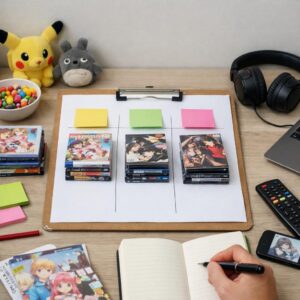
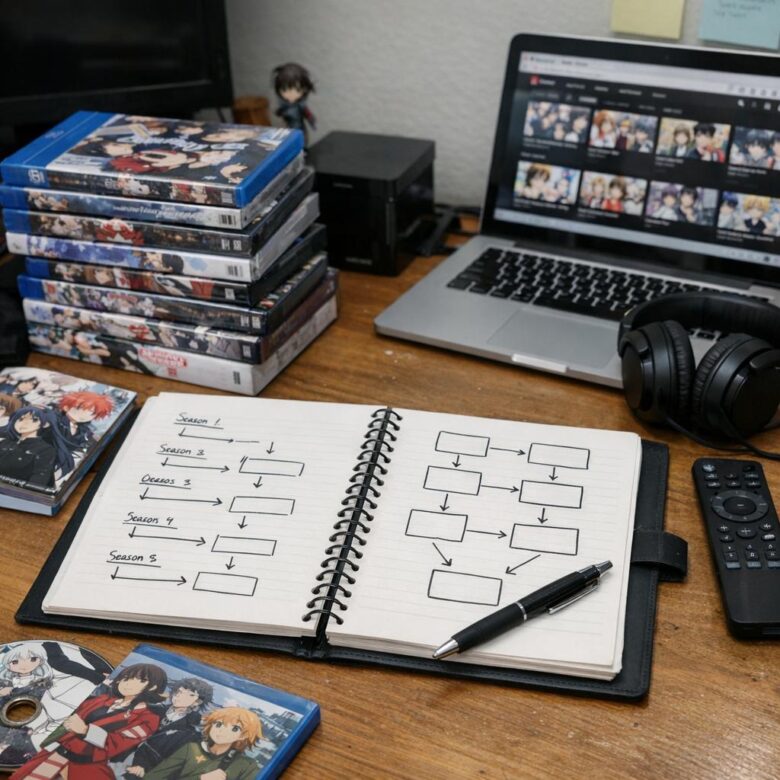
Long anime series are easier to start when you decide what kind of viewing experience you want before choosing an episode list. Some viewers want only the central story, while others want every side adventure, movie, and special. The correct watch order depends on that goal.
For most first-time viewers, release order is the safest default because it preserves the sequence in which characters, concepts, and plot reveals were introduced. Chronological order, fan-made edits, and aggressive filler skipping can be useful, but they require more research and may expose spoilers.
Choose Your Goal Before Choosing a Watch Order
A watch order is not automatically good because it includes everything. It is useful only if it matches how you want to experience the series.
| Viewing goal | Recommended starting approach | Main limitation |
|---|---|---|
| Understand the story with minimal confusion | Follow the original release order | May include optional or slower material |
| Reach the central plot quickly | Use a story-focused order that labels filler and recaps | Can remove enjoyable character moments |
| Experience the entire franchise | Include episodes, films, OVAs, and specials near their original release points | Requires more time and careful tracking |
| Rewatch events in timeline order | Use chronological order after completing the main story | May weaken mysteries or reveal information too early for a first viewing |
If you are unsure, begin with release order and reassess after the first major story arc. It is easier to skip optional material later than to undo a spoiler caused by watching a prequel, movie, or spin-off too early.
What Common Watch-Order Terms Actually Mean
Release order
Release order follows the sequence in which installments were first made available to viewers. This may involve alternating between television seasons, films, and specials. It usually preserves intended introductions and reveals, although release dates alone do not prove that every installment is essential.
Chronological order
Chronological order rearranges the story according to when events happen inside the fictional timeline. This can make some events easier to place, but a prequel may assume that the viewer already knows information revealed in the original series. Chronological order is therefore often better suited to a rewatch.
Canon
“Canon” describes material recognized as part of a particular continuity. The term is not always as simple as “adapted from the manga.” An anime can contain original scenes that support its own continuity, while a film may use familiar characters without affecting the main story.
When researching a franchise, ask which continuity a guide means. A franchise may have separate manga, television, film, remake, game, or alternate-timeline versions.
Filler
Filler usually refers to material that does not advance the central source-based plot. It may be a single comedy episode, an extended anime-original arc, or a side story created between major adaptations.
Filler is not automatically bad or completely irrelevant. Some episodes provide character interaction or a break between intense arcs. A practical guide should label filler as optional rather than telling every viewer to skip it without explanation.
OVA, OAD, ONA, and special
- OVA or OAD: An episode released outside the normal television broadcast, sometimes as a home-video or publication bonus.
- ONA: An animation originally distributed online.
- Special: A broad label that can include comedy shorts, side stories, recaps, or bonus episodes.
These labels describe release formats, not story importance. One OVA may contain a meaningful side story, while another may be an optional parody.
Recap
A recap retells previously covered events, usually in a condensed form. It can help someone returning after a long break, but it generally should not replace the original episodes unless the recap was specifically designed as an alternate entry point.
Remake, reboot, and alternate continuity
A remake retells earlier material with a new production. A reboot starts the franchise again with a revised approach. An alternate continuity uses familiar ideas or characters without necessarily continuing the same story.
Do not insert every remake into one continuous timeline. First determine whether it replaces an earlier adaptation, continues it, or stands separately.
A Practical Method for Building a Watch Order
-
Identify the main entry.
Find the first television season, film, or officially designated starting point for the continuity you want. Do not assume that the title with the earliest in-universe events is the intended introduction.
-
List the major installments.
Write down the main seasons, direct sequels, films, OVAs, specials, spin-offs, and remakes. Keep alternate continuities in a separate group instead of forcing them into one list.
-
Classify each item.
Use practical labels such as essential, optional side story, recap, alternate continuity, or placement uncertain. This is more helpful than a simple canon-versus-filler split.
-
Check when each item was released.
Release timing provides a useful spoiler boundary. If a film appeared after a particular season, placing it earlier may reveal characters, abilities, or relationships that had not yet been introduced.
-
Verify sequel relationships.
Similar titles do not always belong to the same storyline. Check the franchise’s official website, publisher announcements, distributor descriptions, or official episode information for terms such as “sequel,” “prequel,” “spin-off,” or “new adaptation.”
-
Check regional availability separately.
A platform’s catalog and season labels can vary by location and can change over time. Use the relevant service’s official listing to confirm what is currently available in your region. Availability should not be mistaken for the complete story order.
-
Choose what to postpone.
If an item is optional and its placement is disputed, finish the nearest main season first. You can return to the extra later without interrupting the central plot.
How to Place Movies Without Spoiling the Series
Anime films generally fall into several useful categories:
- Direct continuation: The film advances the main story and may be required before the next season.
- Side adventure: The film uses the main cast but has little effect on later episodes.
- Recap or compilation: The film condenses television material, sometimes with a small amount of new footage.
- Alternate version: The film retells or changes events instead of continuing the television storyline.
- Standalone spin-off: The film shares a setting or franchise name but follows different characters or continuity.
When a film’s status is unclear, use its original release point as the minimum safe placement. For example, if it was released after a television season, watching it after that season is less likely to expose an unintroduced character or plot development. This is a spoiler-avoidance rule, not proof that the film is canon.
Do not rely only on character ages, costumes, or power levels to place a movie. A side story can intentionally use a flexible timeline that does not fit neatly between specific episodes.
How to Handle Filler Without Losing Momentum
Long-running series often mix central story episodes with anime-original material. Instead of choosing between “watch everything” and “skip everything,” use one of these approaches:
Story-first route
Watch the essential story and direct continuations. Skip full recap episodes and postpone optional arcs. This route suits viewers who are likely to stop if the main plot pauses for too long.
Balanced route
Watch the central story plus optional episodes that focus on favorite characters, unresolved relationships, or world-building. Skip recaps and side arcs that do not interest you.
Completion route
Watch episodes in release order, including filler and bonus material where available. Keep in mind that some extras may be difficult to place or may not be legally available in every region.
If a filler guide labels individual episodes, check whether any entry is described as “mixed.” Mixed episodes may combine source-based scenes with anime-original material, so skipping the entire episode could remove a relevant transition.
A Spoiler-Safe Research Strategy
Searching for a watch order can reveal character deaths, transformations, villains, and later relationships. Use a limited research process before starting:
- Search for the franchise name followed by “release order,” not character-specific questions.
- Avoid episode thumbnails, comment sections, recommendation feeds, and wiki plot summaries.
- Look for lists that separate required entries from optional material without explaining later plot events.
- Compare the list with official franchise descriptions and release information.
- Stop researching once you have a safe route through the next season or major arc.
You do not need to map an entire franchise before watching episode one. Planning one season at a time reduces both spoilers and decision fatigue.
Why Season Numbers Can Be Misleading
Streaming services, home-video releases, and databases may divide the same anime differently. One source might present a continuous episode count, while another groups episodes into separately named seasons or story arcs.
When titles conflict, track three details:
- The full installment title
- The episode number shown within that installment
- The preceding and following story arcs or release entries
Do not assume that every item labeled “Season 2” is the same production. Confirm the title and episode range through the official distributor or franchise information relevant to your region.
Examples of Different Franchise Structures
Not every long anime needs the same level of planning:
- Mostly continuous series: The main television episodes are watched in numerical order, with films and specials treated separately unless identified as direct continuations.
- Filler-heavy adaptations: Series such as Naruto or Bleach may lead story-focused viewers to consult episode classifications. Because guides can disagree about mixed episodes, the labels should be treated as recommendations rather than official rulings.
- Multi-continuity franchises: Franchises such as Fate contain works with different story routes, settings, and relationships. A single universal chronology can be less useful than choosing one defined entry route and completing it before exploring spin-offs.
- Deliberately structured adaptations: A series such as Monogatari can generate debate about novel order, anime release order, and internal chronology. First-time viewers should select one documented approach rather than switching between orders midway.
These examples illustrate different problems; they are not complete franchise-specific watch orders. Detailed placement should be checked against official release information and a spoiler-light guide dedicated to that series.
Common Watch-Order Mistakes
- Starting with the newest installment: Better-known or newer animation does not mean the story was designed as an entry point.
- Using chronological order automatically: Earlier fictional events can contain later narrative reveals.
- Treating “filler” as “worthless”: Optional episodes can still provide comedy, character interaction, or world-building.
- Assuming every movie is required: Some films continue the plot; others recap it or tell self-contained stories.
- Combining separate continuities: A remake, spin-off, or alternate version may not fit into the main timeline.
- Trusting platform numbering without checking titles: Season and episode groupings can differ between distributors.
- Following a guide that explains too much: A technically accurate order is not helpful if it spoils the reason for that order.
- Planning every extra before episode one: A shorter plan through the first season is usually enough to begin.
A Simple Watchlist Template
A basic note or spreadsheet can prevent confusion without turning viewing into homework:
| Order | Title | Type | Status | Reason |
|---|---|---|---|---|
| 1 | Main series or first season | Essential | Not started | Primary entry point |
| 2 | Next installment | Essential or optional | Not started | Direct sequel, side story, or recap |
| 3 | Movie or OVA | Placement to verify | Postponed | Check after completing the preceding season |
The “reason” column is important. It records why an item is placed there, making it easier to revise the order if you later discover that a movie is optional or a special belongs to another continuity.
Quick Checklist Before You Start
- Have you identified the intended entry point?
- Are you following release order unless there is a clear reason not to?
- Do you know which items are direct sequels?
- Are movies and OVAs marked as essential, optional, recap, or uncertain?
- Have you separated remakes and alternate continuities?
- Have you checked official regional listings for current availability?
- Does your guide avoid major plot spoilers?
- Are you planning only far enough ahead to start watching?
The Bottom Line
Release order is the best default for most first-time viewers. It generally preserves introductions, mysteries, and major reveals. Chronological order is more useful when rewatching, while a story-focused order helps viewers who want to avoid recaps and lengthy optional arcs.
Classify each installment by function rather than relying only on labels such as “canon” or “filler.” Separate direct sequels from recaps, side stories, remakes, and alternate continuities. When information conflicts, use official franchise or distributor material to verify relationships and current regional availability, then use spoiler-light guides for practical episode-level choices.
Most importantly, do not let the size of the franchise prevent you from starting. A clear route through the first season or major arc is enough; the movies, specials, and spin-offs can be evaluated when they become relevant.

The Enfet Otaku Life Editorial Team creates and maintains practical guides about anime viewing, conventions, cosplay, collectibles, merchandise, and licensed streaming. The site focuses on clear, useful information and encourages readers to verify time-sensitive details with official sources.