Subbed and dubbed anime tell the same story in different ways. Subbed anime keeps the Japanese voice track and adds translated text, while dubbed anime replaces the dialogue with performances in another language.
Neither format is automatically better for every new viewer. Subtitles may appeal to viewers who want to hear the original cast, while a dub can make the plot easier to follow without constantly reading. The right choice depends on the series, the quality of its localization, your viewing setup, and how much attention you can give the screen.
What “Subbed” and “Dubbed” Actually Mean
A subbed anime usually combines the original Japanese audio with translated subtitles. You hear the performances recorded for the Japanese release, but the text is still a localization rather than a word-for-word transcript. Translators may need to adapt jokes, idioms, honorifics, and references that do not have direct English equivalents.
A dubbed anime replaces the original dialogue with a translated voice track. Dub scripts often need to sound natural when spoken and fit the timing of each scene. This can lead to different wording from the subtitles even when both versions communicate the same basic meaning.
That distinction matters because “subbed” does not always mean perfectly literal, and “dubbed” does not automatically mean inaccurate. Translation choices and performance quality vary from one production to another.
Subbed vs Dubbed Anime at a Glance
| Consideration | Subbed anime | Dubbed anime |
|---|---|---|
| Voice performances | Keeps the original Japanese cast | Uses a localized voice cast |
| Attention required | Requires regular focus on the screen | Allows the dialogue to be followed by listening |
| Visual focus | Reading may compete with animation, visual jokes, or background details | Makes it easier to watch the full frame during dialogue |
| Localization | May retain more Japanese terms or sentence patterns, depending on the translation | May rephrase dialogue so that it sounds natural when spoken |
| Multitasking | Poor fit when attention is divided | More practical when the viewer cannot continuously read the screen |
| Availability | Depends on the title, season, service, and region | Depends on the title, season, service, language, and region |
When Subbed Anime May Be the Better Choice
Start with subtitles if hearing the original Japanese performances is an important part of the appeal. Vocal tone, pauses, speech patterns, and character-specific ways of speaking can contribute to characterization even when the viewer does not understand Japanese.
Subtitles may also suit viewers who:
- Can give the episode their full visual attention.
- Read subtitles comfortably at the size and speed provided.
- Want character names and unfamiliar terms displayed on screen.
- Prefer the Japanese cast after comparing both versions.
- Are comfortable pausing or rewinding dense conversations.
Subtitles can be especially helpful in stories with many names, organizations, fictional abilities, or locations because written dialogue may make unfamiliar terms easier to recognize. However, fast exchanges can also be demanding when several new terms appear at once.
When Dubbed Anime May Be the Better Choice
A dub is often a practical starting point when reading subtitles interferes with understanding the story or appreciating the animation. This does not make the viewing experience less legitimate. If the dub helps a new viewer connect with the characters and follow the plot, it is doing its job.
Consider a dub if you:
- Find it difficult to read subtitles before they disappear.
- Watch on a small screen or sit far from the television.
- Want to concentrate on action, facial expressions, or background details.
- Are watching with children or a group with different reading speeds.
- Need to look away from the screen occasionally.
- Simply prefer acting in a language you understand by ear.
Dialogue-heavy mysteries, political stories, and fantasy series with complicated terminology can be easier to process in a familiar spoken language. On the other hand, the dub must still be clear and enjoyable to the viewer; quality differs by title, so one disappointing dub should not determine an opinion of all dubbed anime.
A Simple Test for New Viewers
Instead of choosing a permanent side, compare the available versions of the specific anime you want to watch.
- Choose a dialogue-heavy scene. A quiet conversation reveals differences in acting and script style more clearly than a battle dominated by music and sound effects.
- Watch the scene with Japanese audio and subtitles. Notice whether reading feels natural or whether important visual details are being missed.
- Replay it with the dub. Compare clarity, character voices, emotional tone, and how natural the dialogue sounds.
- Use your normal setup. Test it on the television, phone, tablet, speakers, or headphones you will actually use.
- Choose the version that requires less effort without weakening your enjoyment.
For example, a new viewer might prefer subtitles during a quiet character drama but select the dub for a visually busy action series. Another viewer may make the opposite choice because the performances in those particular releases appeal to them more. Both are reasonable decisions.
Check the Language Settings Before Starting
Audio and subtitle availability can differ by service, region, season, and even episode. A listing that says a title is available does not necessarily mean every language track is included.
Before committing to a long series, check the official title page or playback menu for:
- Japanese audio.
- Your preferred dubbed language.
- Subtitle language and customization options.
- Whether every season has the same language choices.
- Whether movies, specials, or bonus episodes use different tracks.
Language options and regional catalogs can change, so the relevant streaming service or official distributor is the best place to verify current availability.
Subtitles and Captions Are Not Always the Same
Viewers should not assume that every English text track contains the same information. Translation subtitles are generally designed to translate spoken Japanese. Captions for an English dub may instead follow the dubbed script and can include sound cues or speaker labels.
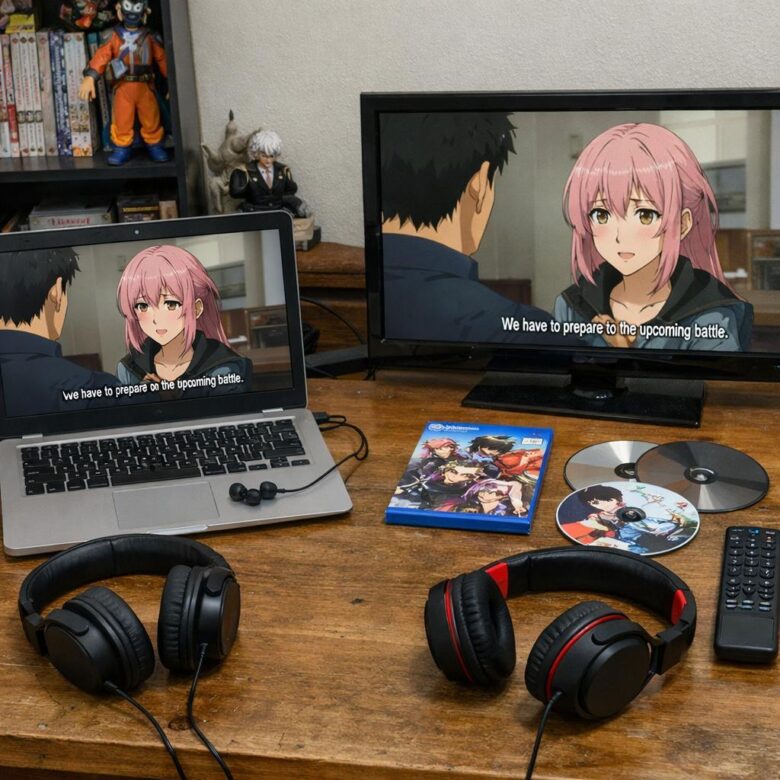
This explains why the English text may not match the English voices when a dub and a subtitle track are used together. The two scripts may have been created for different purposes: one to translate Japanese dialogue for reading and the other to sound natural when spoken.
Accessibility needs should be considered separately from the sub-versus-dub debate:
- Viewers who are deaf or hard of hearing may need captions that identify speakers and meaningful sounds, not only translated dialogue.
- Viewers with low vision or reading difficulties may find a dub easier to follow.
- Subtitle size, color, background, and timing can affect readability.
- Audio description, when available, is a separate feature from dubbing.
Check the platform’s accessibility labels and playback settings rather than relying only on a general “subtitled” or “dubbed” description.
Common Mistakes to Avoid
Treating the Choice as a Loyalty Test
There is no requirement to use the same format for every anime. Preferences can change by genre, series, or even viewing situation.
Assuming One Script Must Be Wrong
Subtitle and dub lines may differ because written and spoken localization have different constraints. A difference in wording is not proof that either version has changed the story. If a disputed line matters to the plot, consult official translation notes or licensed release information where available rather than relying on isolated social-media comparisons.
Multitasking During a Subtitled Episode
Looking away can mean missing dialogue, especially during fast conversations. If full attention is not possible, a dub may prevent avoidable confusion.
Choosing Based Only on Other Fans’ Preferences
Recommendations can identify notable performances, but voice preference is subjective. Listen to both versions when possible before deciding.
Ignoring Subtitle Readability
If the text is too small, too fast, or difficult to distinguish from the background, first check whether the player allows changes to font size, color, opacity, or background shading. If it does not, switching to the dub may be more comfortable than struggling through the episode.
Which Option Is Better for New Viewers?
Dubs are often the easier entry point when reading subtitles creates friction, while subs are a strong choice for viewers who want the original Japanese performances and can focus on the screen. Neither option is universally superior.
Use this quick decision guide:
- Choose subbed if original-language acting is your priority and reading does not distract you.
- Choose dubbed if effortless plot comprehension and visual focus matter more.
- Compare both if voice performance or translation style is the deciding factor.
- Switch when necessary if your device, environment, or accessibility needs change.
The best format is the one that makes the anime understandable, comfortable, and enjoyable. New viewers do not need to commit to subtitles or dubs as an identity; they only need to choose the version that works best for the series in front of them.

The Enfet Otaku Life Editorial Team creates and maintains practical guides about anime viewing, conventions, cosplay, collectibles, merchandise, and licensed streaming. The site focuses on clear, useful information and encourages readers to verify time-sensitive details with official sources.