Important: Before attending, check the convention’s official policies and the venue’s rules for bags, props, badges, re-entry, accessibility, age restrictions, and emergency procedures. Requirements can differ by event and may change.
A first anime convention is easier to enjoy when you prepare for the crowded halls, long lines, unfamiliar venue, and busy departure period. Most precautions are simple: protect your belongings, make a separation plan, wear a safe costume, respect personal boundaries, and know where to get help.
This guide covers what to do before leaving home, how to handle crowds and cosplay safely, and what steps to take if you become separated, feel unwell, lose an item, or encounter harassment.
Before the Convention: Build a Simple Safety Plan
Do not depend entirely on an internet connection or a fully charged phone. Convention centers can be confusing, and messages may be delayed in crowded areas. Save essential information before arriving.
Download or screenshot the essentials
- The venue address and entrance you plan to use
- The convention map and daily schedule
- Your hotel address, parking location, or transit stop
- Badge confirmation and any required entry documents
- The convention’s official contact information
- Locations of information desks, first aid areas, and accessibility services, if published
Use the official convention website, app, email, or social account to verify details. Fan posts can be helpful for general planning, but they may contain outdated schedules or rules.
Create a group separation plan
Choose a precise meeting location that everyone can identify without sending a message. “Near the entrance” is too broad. A better plan would be: “Meet beside the information desk in the main lobby at 3:30 p.m.”
Set a second location in case the first area closes or becomes inaccessible. Groups can also agree on check-in times, especially before evening events or departure.
Optional location sharing may help trusted friends find one another, but it should not replace a physical meeting plan. Share location access only with people you trust, and turn it off afterward if you no longer need it.
Know how you will leave
Plan the return trip before the convention begins. Confirm the operating hours for public transportation, hotel shuttles, parking facilities, and designated ride pickup areas through their official sources. Do not assume that the route used in the morning will remain available late at night.
If you are being picked up, select a well-lit, specific location. Avoid entering a vehicle until the driver and vehicle details match the information shown in the transportation service or the details provided by the person collecting you.
What to Carry Without Overpacking
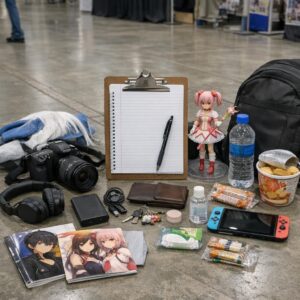
A heavy bag can cause fatigue and becomes harder to manage in narrow aisles. Bring the essentials, keep valuables close to your body, and leave unnecessary items at home or in secure accommodation.
- Phone, charging cable, and a charged power bank
- Photo identification if required by the event or venue
- Badge or admission materials
- Water bottle if permitted under venue rules
- Necessary medication in its original labeled container when practical
- A small snack that fits your dietary needs, if outside food is allowed
- Comfortable backup footwear if your costume shoes are demanding
- Basic blister care and any personal hygiene supplies you may need
- Earplugs or hearing protection if loud spaces are difficult for you
- An emergency contact written on paper in case your phone is unavailable
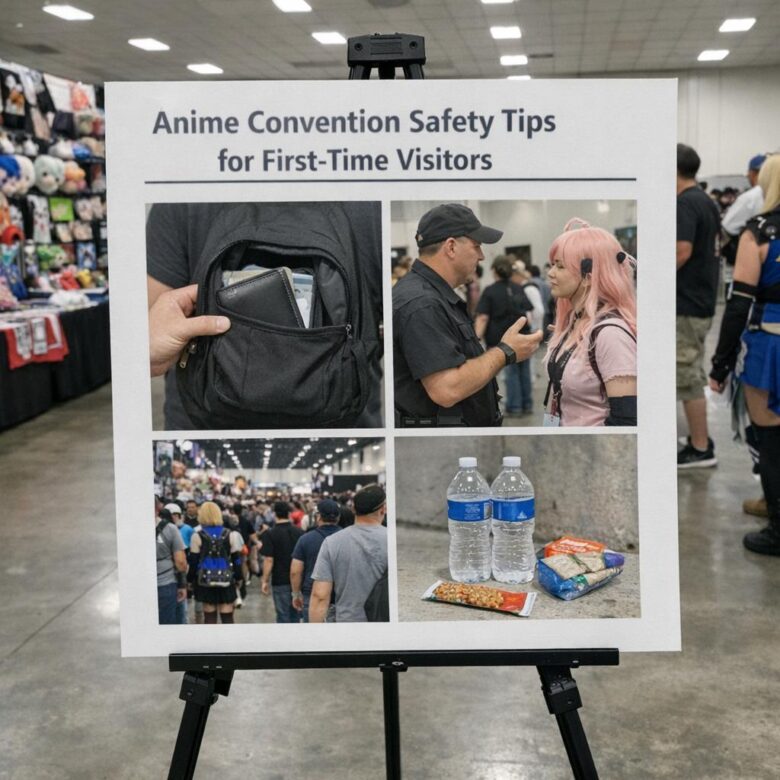
Use a bag that closes securely. Keep your wallet, phone, keys, and identification in zipped compartments rather than open costume pockets. Check the event’s bag-size and security-screening rules before choosing what to carry.
Staying Safe in Crowds, Lines, and Panel Rooms
Busy corridors often become more difficult to navigate near major panels, cosplay gatherings, escalators, and vendor hall entrances. Slow down, follow staff directions, and keep exits and walkways clear.
- Do not stop suddenly in the center of a moving crowd to check a message or take a photo.
- Move to the side before adjusting a costume, opening a map, or reorganizing a bag.
- Avoid walking backward for a photograph without checking the space behind you.
- Keep large props close and controlled so they do not strike other attendees.
- Use stairs, escalators, and elevators carefully; loose fabric and bulky costume pieces may catch or obstruct your view.
- Never block emergency exits, doorways, accessibility routes, or staff work areas.
If a room feels too hot, crowded, loud, or difficult to exit, leaving is a reasonable choice. Missing part of a panel is better than waiting until dizziness, panic, or sensory overload becomes severe.
Follow staff instructions concerning lines and room capacity. Holding a place in line, camping in hallways, or entering through an unofficial doorway may violate event or venue rules and can create unsafe congestion.
Cosplay Safety: Visibility, Movement, Props, and Heat
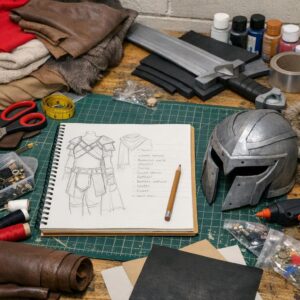
A costume that works for a short photo session may not work for a full day of walking and standing. Try on the complete outfit before the event and evaluate it as equipment, not only as a visual design.
Run a practical costume check
- Vision: Can you see steps, signs, people beside you, and objects near the floor?
- Hearing: Can you hear staff instructions and approaching people?
- Mobility: Can you sit, use stairs, pass through doors, and use a restroom?
- Temperature: Can layers or headpieces be removed if you become overheated?
- Footwear: Can you walk and stand safely for an extended period?
- Fastenings: Are armor, wings, wigs, and accessories secure without sharp exposed edges?
- Emergency removal: Can you get out of the costume quickly, or does a companion know how to help?
Bulky costumes may require a handler—a trusted companion who can watch for obstacles, help with doors, carry water, and communicate when the cosplayer’s vision or hearing is limited. This is especially useful for masks, large wings, long trains, and oversized props.
Conventions and venues may restrict prop materials, dimensions, realistic-looking weapons, projectiles, sharp edges, or functional mechanisms. Verify the current prop policy before traveling. If inspection or peace-bonding is required, follow the official procedure rather than assuming a prop permitted at one event will be accepted at another.
Hydration, Food, Medication, and Rest
Long lines and packed schedules can make basic needs easy to postpone. Build meal, water, restroom, and rest breaks into the day rather than waiting until you feel unwell.
- Drink regularly instead of trying to catch up after hours without water.
- Eat foods that you know work for you, particularly if you have dietary restrictions.
- Follow your normal medication instructions and set private reminders if helpful.
- Take breaks away from crowded or noisy areas.
- Change out of painful footwear or restrictive costume pieces before they cause an injury.
- Do not ignore dizziness, confusion, chest pain, trouble breathing, fainting, or other severe symptoms.
If someone appears seriously ill or injured, contact venue staff, convention security, on-site medical personnel, or local emergency services as appropriate. Do not move an injured person unless remaining in place creates an immediate danger or emergency personnel instruct you to do so.
Anyone with specific medical or accessibility needs should review the convention’s official accommodations process in advance. Available services, documentation requirements, and request deadlines vary by event.
Consent and Personal Boundaries
Cosplay is not permission to touch, photograph, follow, flirt with, or comment sexually on someone. Treat costumed attendees with the same respect you would give anyone else.
- Ask before taking a posed photograph.
- Accept “no” immediately without demanding an explanation.
- Do not touch a costume, wig, prop, mobility aid, or service animal without permission.
- Do not photograph someone who is eating, resting, repairing a costume, or handling a private situation unless they clearly agree.
- Stop recording if a person withdraws consent.
- Do not pressure someone to move to an isolated location for a photo.
If another attendee ignores your boundaries, use a direct statement if it feels safe: “Do not touch me,” “I do not want a photo,” or “Please step back.” Move toward staff, security, or a populated area. You do not owe continued conversation or politeness to someone who is making you feel unsafe.
What to Do About Harassment or Suspicious Behavior
Conventions usually publish a code of conduct that explains prohibited behavior and reporting options. Read it before attending and save the reporting information on your phone.
If an incident occurs:
- Move to a safer, more public location if you can.
- Contact convention staff or venue security.
- Clearly describe the behavior, where it happened, and whether there is an immediate threat.
- Write down the time, location, identifying details, and names of witnesses when doing so is safe.
- Preserve relevant messages, photos, or screenshots rather than posting them impulsively.
- Contact local emergency services if there is immediate danger or a serious crime or medical emergency.
Do not personally chase, restrain, or publicly confront a suspected offender if doing so could escalate the danger. Staff and emergency responders are better positioned to manage an active safety issue.
Protecting Your Badge, Phone, Money, and Purchases
Keep your badge visible when required, but avoid posting a clear image of its barcode, QR code, confirmation number, or other identifying details. Do not lend your badge unless the convention explicitly permits transfers.
In vendor halls, close your bag after every purchase and check that you still have your phone and wallet before leaving a booth. Avoid placing valuables on the floor, an unattended chair, or a restroom counter.
For higher-cost purchases:
- Ask about the seller’s return or exchange policy before paying.
- Inspect the item for visible damage while still at the booth.
- Keep the receipt and note the booth location.
- Do not display large amounts of cash.
- Use only payment methods you understand and are comfortable using.
- Return purchases to secure storage when practical rather than carrying them all day.
If an item goes missing, retrace your route and report it promptly to the convention or venue’s official lost-and-found point. For a lost payment card or phone, use the provider’s official lock, tracking, or cancellation tools as soon as possible.
Extra Planning for Solo Visitors and Minors
If you are attending alone
Solo attendance does not have to mean that nobody knows where you are. Give a trusted person your venue, expected return time, and transportation plan. Arrange one or more check-ins and tell them what to do if you miss a check-in.
Avoid sharing your hotel room number, exact lodging details, or full itinerary with people you have just met. Meet new acquaintances in public convention areas rather than private rooms or isolated locations.
If a minor is attending
A parent or guardian should review the convention’s current age, supervision, pickup, identification, and late-night event rules. Establish:
- Who is responsible for supervision
- Where and when to meet
- Who is authorized to provide transportation
- Which events or areas are off-limits
- What the minor should do if separated or approached by someone who makes them uncomfortable
Age policies differ, so verify them directly with the convention rather than relying on rules from another event or a previous year.
If You Get Lost or Separated
First, go to the agreed meeting point and wait for the agreed amount of time. If that does not work, contact an information desk or staff member. Avoid wandering continuously, because moving people are harder for their group to locate.
For a child or vulnerable attendee who is missing, notify convention staff or venue security immediately. Provide a clear description, the last known location, and any relevant accessibility or medical information.
Common First-Time Safety Mistakes
- Relying on a phone without a charger, offline information, or paper backup
- Using a vague meetup point instead of an exact landmark and time
- Wearing untested shoes, masks, contacts, or restrictive costume pieces all day
- Skipping meals, water, medication, or rest to fit in another activity
- Posting badge codes, hotel details, or a complete live schedule publicly
- Assuming prop, bag, re-entry, or age rules are the same at every convention
- Leaving valuables unattended during photos or costume repairs
- Waiting alone in an unofficial or poorly lit pickup area
- Ignoring discomfort because leaving a panel or meetup feels inconvenient
- Trying to handle harassment or a medical emergency without contacting staff
Quick Convention Safety Checklist
Before leaving home
- Check official badge, bag, prop, re-entry, accessibility, and age policies.
- Save the venue map, schedule, address, and event contact information.
- Test the full costume for movement, vision, temperature, and restroom access.
- Choose primary and backup meeting points.
- Confirm transportation in both directions.
- Charge your phone and power bank.
During the event
- Keep valuables secured and your bag closed.
- Take regular water, food, restroom, and rest breaks.
- Ask before photographing or touching anyone.
- Keep walkways and exits clear.
- Follow staff directions and posted venue rules.
- Leave crowded or uncomfortable situations before they become emergencies.
Before heading home
- Check that you have your phone, wallet, keys, identification, badge, and purchases.
- Confirm the correct departure or pickup location.
- Tell your group before leaving.
- Use a staffed, populated, and well-lit exit when possible.
Final Advice
You do not need to attend every panel, buy every item, or stay until the venue closes for the day to be successful. A good first convention is one you can enjoy without ignoring your comfort, health, belongings, or boundaries.
Prepare a simple plan, verify the event’s current rules, and ask official staff for help when something feels wrong. Leaving a line, changing plans, taking a break, or going home early can all be sensible safety decisions.

The Enfet Otaku Life Editorial Team creates and maintains practical guides about anime viewing, conventions, cosplay, collectibles, merchandise, and licensed streaming. The site focuses on clear, useful information and encourages readers to verify time-sensitive details with official sources.