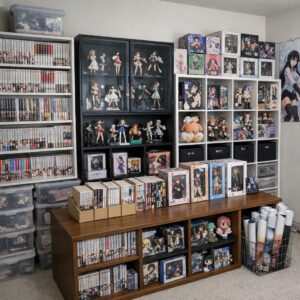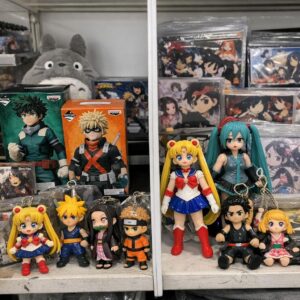
Anime collectibles can be damaged gradually by dust, sunlight, heat, moisture, unstable shelving, and improper cleaning. The safest approach depends on the item: a PVC figure does not need the same care as a resin statue, manga volume, acrylic stand, plush, or boxed edition.
You do not need to turn your room into a museum. Start by controlling the biggest risks: keep collectibles out of direct sunlight, place them on stable shelves, reduce dust exposure, and handle them with clean, dry hands.
Quick Protection Checklist
- Move collectibles away from direct sunlight and hot windowsills.
- Use a closed cabinet or individual display cover where practical.
- Dust gently before buildup becomes difficult to remove.
- Keep the room’s temperature and humidity reasonably stable.
- Confirm shelf load limits before displaying heavy statues.
- Support figures by their bases rather than delicate parts.
- Keep original supports, blister trays, and assembly instructions.
- Inspect the collection periodically for leaning, fading, moisture, pests, or loose parts.
Match the Protection Method to the Collectible
| Collectible type | Main risks | Useful precautions |
|---|---|---|
| PVC and ABS figures | Dust, fading, leaning, paint transfer, broken pegs | Shade, stable support, gentle dusting, enough space between parts |
| Resin statues | Chips, snapped parts, falls, shelf failure | Strong shelving, low placement, careful two-handed handling |
| Acrylic stands | Surface scratches, cracks, fading, loose bases | Non-abrasive cleaning, individual sleeves for storage, minimal flexing |
| Manga, art books, and paper goods | Fading, yellowing, moisture, bent corners, insects | Upright storage, shade, dry shelves, archival-quality enclosures when needed |
| Plushies and fabric items | Dust, odors, moisture, pests, misshaping | Covered storage, gentle vacuuming through a screen, care-label cleaning |
| Boxed editions | Crushed corners, scuffs, fading, trapped moisture | Limited stacking, box protectors, dry storage, support underneath |
| Pins, keychains, and metal goods | Scratches, tarnish, chipped enamel, bent fittings | Separate compartments, dry storage, protection from rubbing |
Protecting Collectibles From Dust
Dust is not only a cosmetic problem. It settles in hair sculpting, clothing folds, joints, textured bases, and packaging seams. Heavy buildup requires more contact to remove, increasing the chance of scratches or broken details.
Choose the right level of enclosure
- Open shelf: inexpensive and easy to rearrange, but requires frequent dusting.
- Closed cabinet: reduces dust while keeping several items visible. Door gaps mean it will not be completely dustproof.
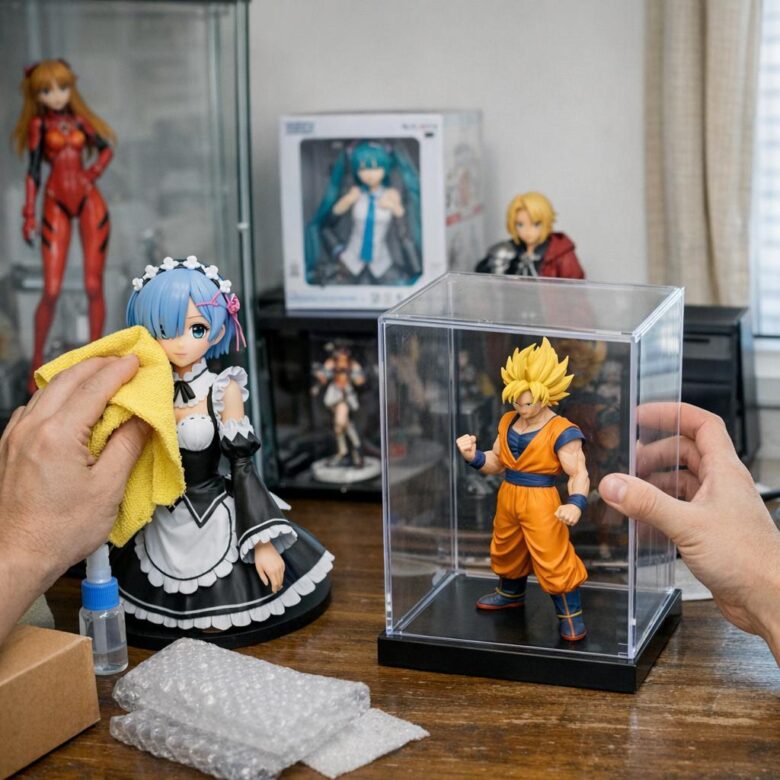
- Individual display cover: useful for a particularly delicate figure or statue, but takes more shelf space.
- Storage box: suitable for rotation or long-term storage, provided the item is clean, dry, supported, and not compressed.
Weather stripping may reduce cabinet gaps, but do not make a cabinet airtight if moisture could become trapped inside. Check enclosed displays for condensation, musty odors, or damp packaging.
How to dust figures safely
- Wash and dry your hands, or use clean gloves that still allow a secure grip.
- Move the figure to a clear, padded work area if it can be moved safely.
- Remove detachable accessories according to the item’s instructions.
- Use a clean, very soft brush or a hand-operated air blower to loosen dust.
- Work from the top downward so loosened dust does not settle on cleaned areas.
- Hold thin parts steady near their attachment points without bending them.
- Check that pegs, accessories, and the base are secure before returning the item.
A dedicated soft brush is preferable to one that has held makeup, paint, or cleaning products. Microfiber cloths are useful on broad, durable surfaces, but their fibers can catch on sharp sculpted details. Avoid aggressive rubbing.
Do not apply household cleaners, alcohol, solvents, polish, or adhesive removers unless the manufacturer specifically states that they are safe for that material and finish. A product that is harmless to glass may cloud acrylic or damage paint and printed details.
Reducing Sunlight and UV Exposure
Direct sunlight can fade printed packaging, fabric, paper, and painted surfaces. It can also create uneven damage when only one side of an item faces a window. The simplest protection is distance: move the display away from direct sun rather than relying entirely on coatings or films.
Check the display throughout the day
A shelf that looks shaded in the morning may receive direct light later. Observe the room at different times and remember that the sun’s angle changes during the year. Pay particular attention to windows, glass doors, mirrors, and other reflective surfaces.
Use light protection in layers
- Place the collection away from direct window light.
- Use curtains, blinds, or shades during the brightest part of the day.
- Consider UV-filtering window film or display materials for vulnerable items.
- Limit unnecessary lighting when no one is viewing the display.
- Choose cabinet lighting that produces little heat and leaves space around the collectibles.
UV-filtering products reduce exposure but do not make a display immune to fading. Performance varies by material and product, so check the manufacturer’s specifications, installation requirements, and replacement guidance. Visible light can also contribute to fading over long periods.
Rotating a figure may make exposure more even, but it does not prevent damage. Moving the display out of the light is the better solution.
Managing Heat, Humidity, and Moisture
Attics, garages, damp basements, windowsills, radiator shelves, and areas beside heat-producing electronics are generally poor locations for long-term storage. Large or repeated environmental changes can affect plastics, paint, paper, adhesives, fabrics, and metal fittings.
A basic digital thermometer and hygrometer can help reveal patterns. The goal is a reasonably stable, comfortable indoor environment rather than constant correction in response to every small reading. If a collectible has manufacturer-provided storage requirements, follow those instructions.
Warning signs that need attention
- Condensation inside a cabinet or storage container
- Musty odors, visible mold, or damp cardboard
- Wavy pages, curled cards, or swollen boxes
- Rust or discoloration on metal components
- A figure beginning to lean or a base becoming unstable
- Sticky, cloudy, cracked, or unusually brittle surfaces
Silica gel can help manage moisture inside a small enclosed space, but it is not a substitute for correcting a damp room. Keep packets from touching the collectible, and replace or regenerate them only according to their instructions. Avoid loose desiccant around children and pets.
If mold is present, separate the affected item from the rest of the collection. Do not brush active mold in the display room, because that can spread particles. Valuable, signed, or irreplaceable items may require advice from a conservator familiar with the relevant material.
Preventing Falls, Breakage, and Shelf Damage
Physical damage is often sudden and irreversible. A closed cabinet will not protect a statue if the shelf bows, the unit tips, or a heavy item falls onto smaller pieces.
- Check the furniture manufacturer’s load limit for each shelf and for the unit as a whole.
- Distribute weight rather than concentrating several statues in one area.
- Place heavier collectibles on lower shelves where possible.
- Use the correct anti-tip hardware for the furniture and wall type.
- Keep figures away from shelf edges and cabinet doors.
- Do not rely on a loose peg or accessory to support the item’s weight.
- Leave enough space to remove one collectible without bumping another.
Resin statues can be heavy and brittle. Lift them with two hands while supporting the main body or base; do not lift them by a sword, wing, hair strand, or other projecting detail. Before moving a complex statue, remove detachable parts and consult its assembly instructions.
In homes with pets, children, vibration, or other tipping risks, enclosed and anchored storage is usually safer than an open floating shelf. Any adhesive putty, gel, or stand should be checked for material compatibility before it touches a painted base.
Handling Figures, Acrylics, and Printed Items
Clean, dry hands are appropriate for many routine tasks. Gloves can help prevent fingerprints on glossy, metallic, or printed surfaces, but poorly fitting gloves may reduce grip. The priority is secure handling without touching fragile details.
Figures and statues
- Hold the base or strongest central section.
- Do not force tight pegs, joints, or interchangeable parts.
- Check the orientation before inserting an accessory.
- Use the supplied support arm or stand when one is included.
- Keep separated painted parts from rubbing during storage.
Acrylic stands
Acrylic scratches more easily than it may appear. Remove dust before wiping, use a clean non-abrasive cloth, and avoid paper towels or harsh cleaners. When storing several stands, keep them separated in soft or archival-quality sleeves so printed faces do not rub against hard surfaces.
Manga, cards, prints, and box art
Store books upright with adequate support, but do not pack them so tightly that removal damages the spines. Use archival-quality, acid-free enclosures for valuable paper items where appropriate. Keep tape, rubber bands, self-adhesive notes, and unknown plastics away from paper and printed surfaces.
For signed items, verify that any sleeve, backing board, frame, or photo corner is intended for long-term paper storage. Avoid placing an autograph directly against ordinary glass if moisture or sticking is a concern.
Plushies
Follow the sewn-in care label when available. Washing can affect fabric texture, stuffing, printed faces, glued decorations, or embroidered details. For light dust, use a low-suction vacuum through a clean mesh screen so small accessories are not pulled into the nozzle. Store plush loosely rather than compressing it for long periods.
Storing Collectibles That Are Not on Display
Before storage, photograph the item and its accessories. This creates a simple inventory and helps with correct reassembly later.
- Clean the collectible and allow it to dry completely.
- Remove batteries from electronic merchandise when the manufacturer permits it.
- Detach fragile accessories rather than leaving them under tension.
- Use the original blister tray or shaped packaging if it supports the item without rubbing.
- Wrap or separate loose parts so they cannot strike painted surfaces.
- Label the outer container without attaching tape to the collectible or retail box.
- Store the container off the floor in a dry, temperature-stable indoor area.
Do not overfill bins or stack heavy containers on top of lightweight retail boxes. Original packaging is useful for support and identification, but it is not automatically archival or moisture-proof. Inspect stored items periodically rather than assuming a closed box is safe indefinitely.
Common Preservation Mistakes
- Assuming indirect sunlight is harmless: prolonged light exposure can still affect sensitive materials.
- Using paper towels on glossy surfaces: they may leave fine scratches.
- Spraying cleaner directly onto a collectible: liquid can enter seams or damage paint and printing.
- Sealing a damp item: enclosed moisture creates a more serious problem than dust.
- Overcrowding a shelf: parts rub together and items become harder to remove safely.
- Stacking boxes too high: lower boxes can develop crushed corners and bowed panels.
- Ignoring the stand or support arm: unsupported poses may become unstable.
- Using unknown adhesives: putty, tape, and glue may stain or react with surfaces.
- Cleaning before checking for loose parts: a brush can dislodge small accessories or damaged paint.
- Trusting a cabinet’s appearance: shelf capacity, anchoring, heat, and door gaps matter more than style.
A Simple Maintenance Routine
A manageable routine is more effective than waiting for visible damage:
- During regular room cleaning: check for visible dust, direct sunlight, and unstable items.
- When rearranging the display: inspect pegs, supports, bases, paint contact points, and shelf condition.
- After seasonal weather changes: review room humidity, condensation, and window exposure.
- Before long-term storage: photograph, clean, dry, separate, support, and label every part.
Prioritize protection according to vulnerability rather than price alone. A replaceable figure with a delicate support may need better physical protection than an expensive but sturdy item. Signed paper goods may need stronger light control, while a heavy resin statue requires careful load planning and fall prevention.
Final Takeaway
The most effective setup combines shade, stable indoor conditions, secure shelving, reduced dust exposure, and careful handling. Start with the risks that could cause permanent damage: direct sunlight, unstable furniture, moisture, excessive heat, and unsafe cleaning methods.
For unusual materials, older collectibles, or valuable limited editions, consult the manufacturer’s care instructions before using cleaners, adhesives, replacement stands, protective films, or storage products. When those instructions are unavailable, use the least invasive method and test any material on an inconspicuous area only when doing so is safe.

The Enfet Otaku Life Editorial Team creates and maintains practical guides about anime viewing, conventions, cosplay, collectibles, merchandise, and licensed streaming. The site focuses on clear, useful information and encourages readers to verify time-sensitive details with official sources.